In today’s screen-dominated world, information travels faster than ever. Messages are sent in seconds, notes are stored in the cloud, and ideas are captured with a click. While digital tools have transformed the way we work and learn, something essential is quietly being rediscovered: the power of handwriting.
As more people experience screen fatigue, constant notifications, and fragmented attention, there is a growing return to pen and paper. Handwriting — once considered old-fashioned — is now being recognized as a powerful tool for concentration, memory, creativity, and meaningful thinking. Whether in a classroom, office, or home workspace, the simple act of writing by hand is proving more valuable than ever.
At Deli, we believe that writing is more than a practical function. It is a connection between mind and movement, thought and expression, intention and execution. A good pen and a well-made notebook don’t just record ideas — they help shape them.
Digital devices are designed for speed and connectivity — but they are also major sources of distraction. Every notification, pop-up, update, and open tab competes for attention. Even with the best intentions, it is easy to lose focus when switching between apps, windows, and messages.
Handwriting, on the other hand, removes these interruptions.
When you pick up a pen and a sheet of paper, your environment becomes simpler. There are no incoming alerts. No scrolling feeds. No multitasking. Just a physical connection between your hand, the pen, and the page.
This environment encourages deep focus.
Studies and everyday experience alike show that handwriting allows the brain to concentrate on the essential information in front of it. Each letter must be formed manually. Every word requires intention. This natural slowness helps center the mind on one task at a time — a level of attention that modern digital tools often disrupt.
Whether you are jotting down meeting notes, planning a new project, or studying for an exam, that focused state of mind can significantly improve efficiency and clarity.
With smooth, reliable pens like the Deli EQ199 Ball Point Pen, EQ4 Ball Point Pen, or E6600S Gel Pen, writing becomes effortless, reducing hand strain while maintaining steady, consistent lines. The feeling of uninterrupted flow enables you to stay present with your thoughts instead of fighting with your tool.
EQ199: https://www.deliworld.com/product/deli-eq199-bl-ball-point-pen.html
EQ4: https://www.deliworld.com/product/deli-eq4-bk-ball-point-pen.html
E6600S: https://www.deliworld.com/product/deli-e6600s-mt-gel-pen.html
These writing instruments are designed for comfort, control, and consistency — helping users enter a focused state that encourages meaningful productivity.
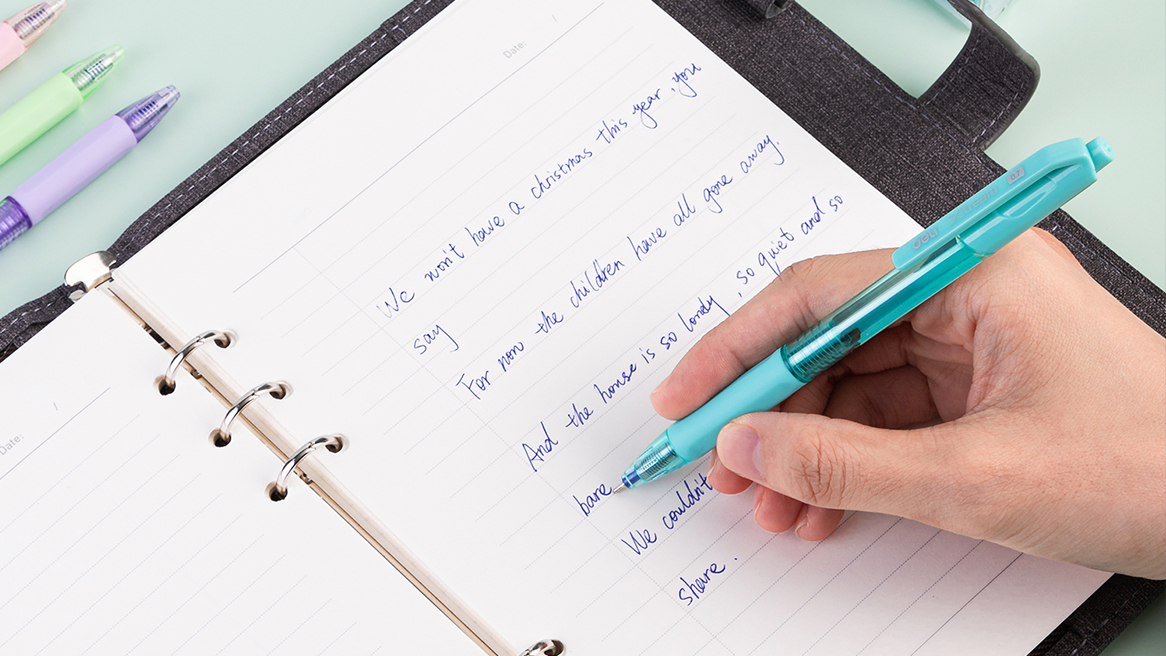
One of the most powerful advantages of handwriting over typing is its impact on memory.
Scientific research has shown that handwriting activates more regions of the brain than keyboard input. When writing by hand, we engage multiple cognitive processes at once: motor movement, visual recognition, spatial awareness, and language processing. This multi-sensory experience strengthens neural connections and helps embed information into long-term memory.
In contrast, typing often becomes a mechanical act. Fingers move quickly, sometimes faster than genuine comprehension. Words may be recorded, but the mind has not fully absorbed their meaning.
This is why students who take handwritten notes often perform better in comprehension and recall than those who rely solely on laptops. Writing forces people to summarize, interpret, and rephrase information in their own words — a deeper level of thinking known as “processing for understanding.”
It is not only students who benefit. Professionals, entrepreneurs, researchers, and creatives also find that handwriting supports clearer thinking and stronger recall. Writing by hand during brainstorming helps ideas stick. Drafting plans on paper helps structure priorities. Journaling helps solidify personal reflections.
Paired with a high-quality notebook, such as Deli’s Leather Cover Notebook, handwriting becomes both an intellectual and sensory experience. The texture of the paper, the weight of the notebook, and the smooth ink flow all contribute to an immersive process.
This tactile engagement with materials is what makes information more “real” for the brain. It stops content from floating away in digital space and anchors it to physical memory.
In our fast-paced world, slow processes are often seen as inefficient. But when it comes to thinking clearly, slowness can be a hidden strength.
Handwriting is naturally slower than typing. This forces the brain to pause, evaluate, and organize ideas more carefully. Instead of quickly dumping information, you begin building meaningful structure. Thoughts become more refined. Logic becomes clearer.
This is particularly important for:
Strategic planning
Personal journaling
Creative writing
Academic reflection
Professional note-taking
The slower pace of handwriting gives space for insight. As you pause between sentences or adjust a phrase, your mind reflects. New ideas surface. Hidden connections appear.
This reflective aspect of writing is something digital tools struggle to replicate. With pens like the Deli E6600S Gel Pen, which glides smoothly across the page without skipping or blotting, writers can enjoy an uninterrupted flow — reducing frustration and allowing deeper ideas to emerge naturally.
Rather than racing through information, you begin to engage with it.
In this way, handwriting becomes a form of thinking, not just recording.
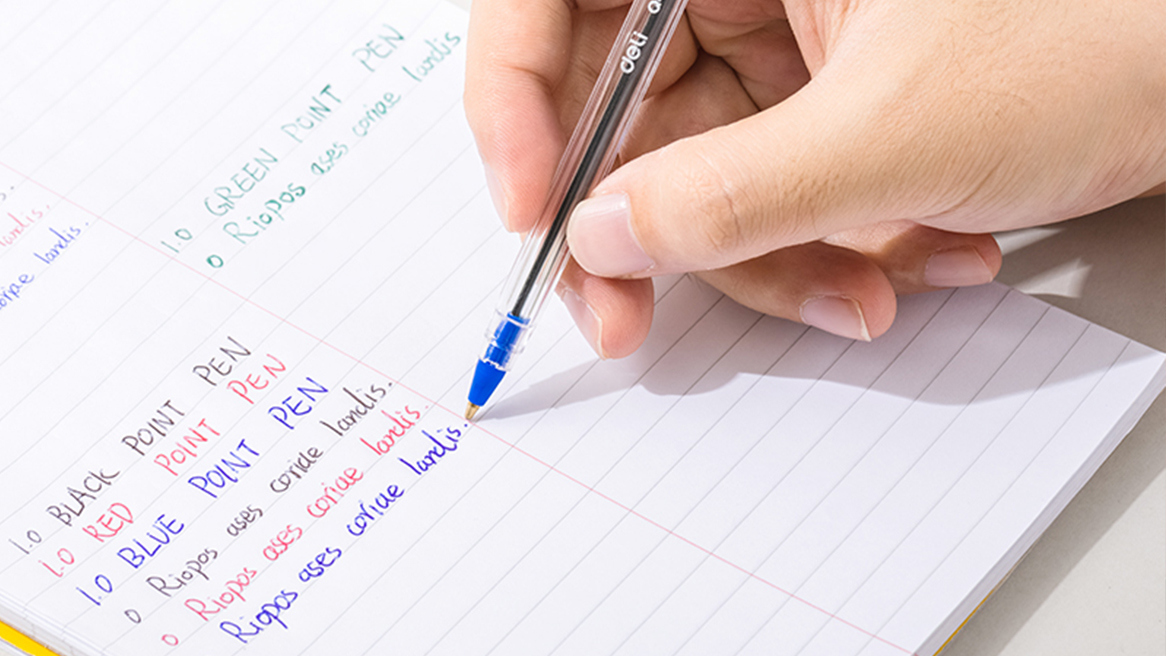
Beyond productivity and memory, handwriting also has psychological benefits. Many people turn to journaling, sketching, or letter writing as forms of stress relief, emotional processing, and mindfulness.
The physical motion of writing can be calming. It shifts attention inward. It provides a rhythm that slows down racing thoughts. It becomes a private space where ideas and feelings can be expressed without pressure.
This is particularly valuable in an era where mental overload and burnout are increasingly common. A simple daily habit of writing a few lines can help regain clarity, reduce anxiety, and restore control.
A well-designed pen, balanced in weight and comfortable in the hand, allows longer writing sessions without fatigue. Deli’s thoughtfully engineered ballpoint and gel pens support these moments of reflection, turning everyday writing into a therapeutic practice.
Handwriting is not just about the hand — it is also about the tool.
A poor-quality pen that scratches, leaks, or skips can disrupt even the most focused mind. In contrast, a reliable pen enhances confidence, encourages longer writing, and removes friction from thought.
Deli pens are engineered with:
Consistent ink flow
Precision tips
Ergonomic grip design
Strong, durable construction
These features ensure a smooth connection between thought and paper. When writing becomes effortless, creativity and logic can flow freely.
Whether used in professional environments, educational settings, or personal spaces, Deli writing tools are created to support clear communication, productivity, and meaningful expression.
As artificial intelligence, automation, and digital systems continue to evolve, handwriting remains a uniquely human act. It reflects personality. It carries emotion. It connects the mind and the body in a way no keyboard can replace.
In boardrooms and classrooms, creative studios and home offices, handwriting continues to offer what technology cannot: depth, presence, and authenticity.
At Deli, we recognize that progress does not always mean replacing the old with the new. Sometimes, it means understanding the timeless value of practices that continue to enrich human experience.
That is why our mission goes beyond making stationery. We design tools that support thought, creativity, learning, and connection.
Because in a digital world full of speed and data, the written word — formed by hand — still has the power to inspire, organize, remember, and create.
And sometimes, the quietest tools make the biggest difference.