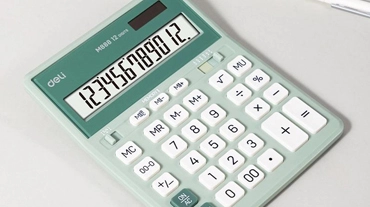
A calculator in science is an essential tool for students, researchers, and professionals who need accuracy and speed in scientific calculations. From solving complex equations to processing logarithmic and statistical data, the right calculator in science can significantly enhance productivity and accuracy in STEM-related tasks. Understanding the key features and choosing the correct model ensures optimal performance and long-term usability.
Before purchasing a calculator in science, it's important to assess the level of complexity required for your tasks. High school students may only need a basic scientific calculator for trigonometric and exponential functions, while university students and engineers often need advanced models that include equation solving, calculus functions, and matrix operations.
When selecting a calculator in science, ensure it includes the essential functions for your field. Here's a simple comparison table to help guide your choice:
| Feature | Why It Matters |
|---|---|
| Scientific Notation | Essential for very large or small values |
| Function Keys (SIN, LOG) | Required for trigonometry and logarithms |
| Equation Solver | Helps save time on multi-step calculations |
| Multi-line Display | Makes it easier to review and edit expressions |
| Durable Build | Withstands daily academic or lab use |
If the calculator in science is intended for use in standardized tests or school exams, check the regulations of your institution. Some calculators with programmable functions or graphing capabilities may not be allowed. Non-programmable scientific calculators are typically safe for most academic settings.

An ideal calculator in science combines functionality with user-friendly operation. Look for a clear layout, responsive keys, and a readable display. Battery life is also important—solar-powered options or dual-power calculators can be more reliable, especially for long hours of use in labs or classrooms.
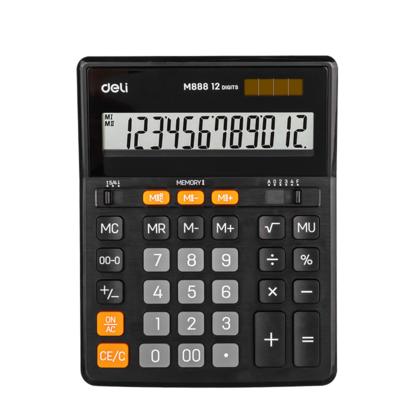
As a global leader in educational and office tools, Deli Group offers a wide range of high-quality options for every type of calculator in science—from basic to advanced—ensuring that students and professionals alike have the right tools for every scientific challenge.